
Every buyer I work with asks the same question in the first thirty seconds: “OK, so what are you actually going to do?”
Fair question. A home inspection isn’t mysterious — it’s a systematic, hands-on read of the ten major systems in your house, in a set order, with a trained eye watching for specific failure patterns. Here is exactly what that looks like, with real (redacted) photos from inspections I’ve done in the last six months across Fauquier, Loudoun, and surrounding counties.
The ten systems I inspect, in order
Every Dogwood home inspection follows the InterNACHI Standards of Practice, which means I look at every one of the following that is safely accessible. I do them in roughly this order because that’s how the building goes together — top down, outside in.
1. The roof
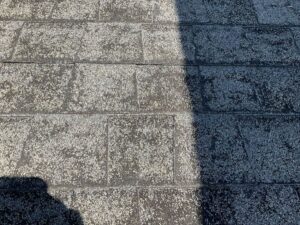
I walk every roof I can safely walk. Camera pole photos and ground-level binoculars are tools I use when a roof is genuinely unsafe (steep, wet, metal, slate), but you can’t read a shingle the same way from forty feet away as you can with your hand on it.
What I check: shingle condition and granule loss, flashing at every penetration, valley condition, chimney crown and counter-flashing, gutters and downspouts, attic ventilation at the eaves and ridge, skylights, and the approximate remaining service life of the system. About one in three roofs I inspect in Northern Virginia is in its final five years of service — that’s a meaningful negotiation item if I catch it.
2. The exterior
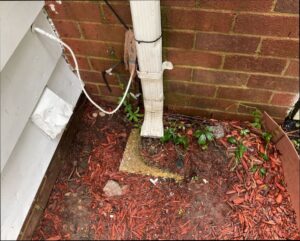
Siding, trim, flashing, caulking, drainage, grading, decks, porches, walkways, retaining walls, exterior doors and windows. The grading and drainage piece is where I spend more time than most inspectors — water management is the single biggest predictor of long-term foundation health, and it’s almost entirely visible from the exterior in fifteen minutes if you know what to look for.
3. Structural components
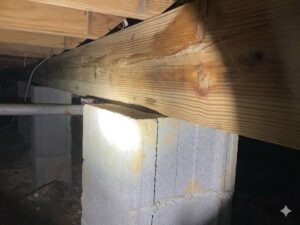
Foundation, sill plates, floor system, framing, attic rafters and trusses. I’m looking for movement (active vs. historical), moisture damage, insect damage, modifications that were done without proper engineering, and any signs that the building is doing something other than standing still.
This is where my masonry background gets a workout. A stone foundation in a 1905 Warrenton home and a poured-concrete foundation in a 2010 Gainesville new-build need to be read by different lenses entirely.
4. Electrical system
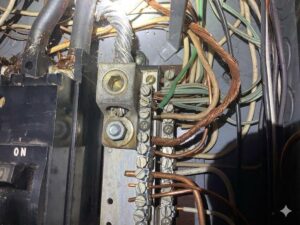
Service entrance, main panel, sub-panels, breakers, grounding, bonding, AFCI and GFCI protection, visible wiring, light fixtures, and a sampled set of outlets and switches in every room. I open every electrical panel I have safe access to — finding aluminum wiring, double-tapped breakers, or improperly sized circuits is something you cannot do from outside the panel cover.
5. Plumbing system
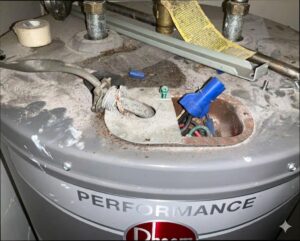
Supply and waste lines, water heater, fixtures, visible leaks, water pressure, shut-offs, sump pumps and ejector pumps. I run every fixture I can — every sink, every shower, every toilet. I want to see what the system does under actual load, not just look at the pipes.
6. HVAC
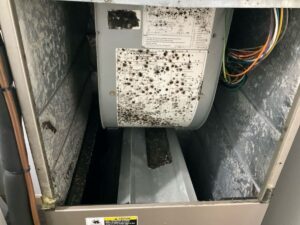
Heating system, cooling system, age and condition, distribution, filters, condensate handling, thermostat operation. I check what each system actually outputs at the registers — back-room temperature differentials of 5-10 degrees are common findings, especially in homes where the HVAC has been replaced without adjusting the ductwork.
7. Interior
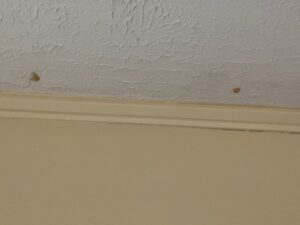
Walls, ceilings, floors, doors, windows, stairs, railings, cabinets, and any visible moisture or damage. I’m looking for the subtle stuff — a door that won’t latch could be a settled foundation corner, a hairline ceiling crack could be a roof leak that hasn’t yet shown up as a stain.
8. Insulation and ventilation
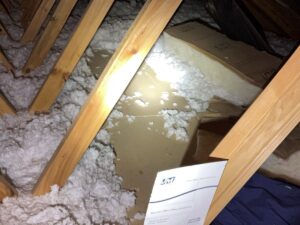
Attic insulation level and type, crawlspace insulation, vapor barriers, ventilation in both attic and crawl. Most of the energy loss in a Northern Virginia home happens in two places: the attic floor and the rim joists at the basement ceiling. Both are easy to inspect; both routinely have problems.
9. Built-in appliances
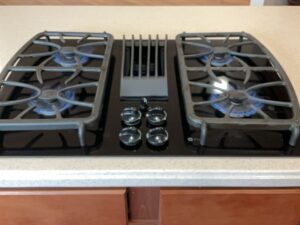
Range, oven, dishwasher, built-in microwave, garbage disposal, exhaust hood. I test each one — most home inspectors check that the dishwasher turns on; I run it through a full cycle to confirm drainage and any leaks.
10. Garage and fireplace
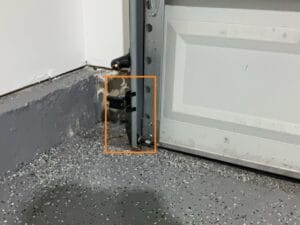
Garage door operation including safety reverses, firewall integrity between garage and living space, fireplace condition, chimney visible from below, hearth extension and combustible clearances. Garages are where home inspectors most commonly miss safety issues — improper firewall penetrations, gas water heaters without proper combustion air, or door openers without functional safety reverses.
How I label findings in your report
I don’t lump every finding into “fix this” or “don’t fix this.” That’s a false choice, and it’s the kind of black-and-white reporting that turns a routine inspection into a deal-killer. Every finding in a Dogwood report gets one of seven specific labels, and the labels are what let you, your agent, and the seller have a real conversation about what actually needs to happen — without anyone assuming the whole house has to be torn down and rebuilt.
Major concern. Safety hazards, structural issues, or active failures where waiting genuinely makes the problem worse. A cracked heat exchanger leaking carbon monoxide. A roof actively leaking into the attic. An electrical panel with corroded bus bars. These are the items that drive negotiation and need a contractor on the phone in the first week of ownership. Most reports have one or two of these; a meaningful share have none.
Repair. Something that’s broken or failed but isn’t dangerous and isn’t getting worse quickly. A non-functioning outlet, a leaking shut-off valve, a damaged section of trim. Fix it at your convenience — these aren’t urgent, but they’re not “leave it alone” either. They’re work orders waiting to happen.
Recommended maintenance. Items that are wear-related and that any responsible homeowner should address as part of normal upkeep. Re-caulking a tub, cleaning gutters, replacing a furnace filter, repainting weathered trim. These are not defects in the alarming sense — they’re the natural cost of owning a home. Every report has dozens of them, and that doesn’t mean the house is in bad shape.
Due diligence. Items where you should investigate further — usually with a specialist — before you sign closing papers. A damp spot in a basement corner that needs a moisture-intrusion specialist’s read. A 30-year-old septic system that needs a licensed septic contractor to pump and inspect. A foundation crack a structural engineer should evaluate. “Due diligence” doesn’t mean “scary.” It means I’ve taken the finding as far as a generalist inspection should, and you need a domain expert to tell you the rest before you commit.
Monitor. Stable today, but worth watching over time. A historical foundation crack that hasn’t moved in decades. A roof at year fifteen of an estimated twenty-five-year life. A water heater that’s working at twelve years old. The action here isn’t a repair — it’s a calendar reminder to check on this item annually so you see the change before it becomes a surprise.
Improve or upgrade. Working as originally designed, but the design is dated. An original 1985 electrical panel that’s safe but undersized for modern usage. Single-pane windows that function but bleed energy. Cast-iron drain lines that work but won’t last another twenty years. These aren’t defects in the report-writing sense — they’re decisions about what kind of house you want to own five years from now.
Efficiency. Specific items where adding insulation, replacing a fixture, or modifying a system would meaningfully reduce your monthly utility bills. Attic insulation below recommended depth. An old water heater that could be wrapped in a $35 insulation blanket. Air leaks at exterior wall penetrations. Usually low-cost interventions with fast payback, and I flag them because most inspectors don’t bother.
The point of having seven labels instead of two is that they let you respond proportionately. A 90-page report that flags every single item in the same red font isn’t thorough — it’s lazy, and it kills more deals than it should. A report with seven categories gives you, your agent, and the seller a real framework for prioritizing what matters, deferring what can wait, and ignoring what’s actually fine.
What’s not included (and why)
Honest disclosure: a home inspection isn’t a tear-down. There are things I can’t see, can’t access, or shouldn’t try to assess.
I don’t open walls. I don’t dig under the foundation. I don’t pump out the septic to inspect the inside of the tank. I don’t drain the pool. I don’t operate systems that are turned off (a winterized house, an A/C in February, a heater in August). I don’t assess code compliance — that’s a code official’s job, and codes change.
When I find something that needs a specialist’s eye — a structural engineer, a licensed septic contractor, a chimney sweep, an HVAC technician — I’ll tell you, and I’ll tell you why. A good inspection includes knowing the limits of what an inspection can do.
The actual deliverable
What you get in your inbox the same day:
A photo-rich digital PDF, usually 30-70 pages. The first few pages are an executive summary with all findings, with hyperlinks down to the full detail. The next section is the system-by-system technical report with hundreds of photos, each finding tagged with one of the seven labels above. The final pages are the recommendations summary and a maintenance schedule for the home.
You also get my cell number for twelve months. Call me anytime a contractor’s estimate seems off, a new issue appears, or you just want a second opinion on something the seller said. That’s part of what you paid for.
Want to see what a real report looks like?
The best way to know what you’re getting is to see one. Download a real (redacted) report from a recent Dogwood inspection:
Download a Sample Inspection Report →
Or schedule your inspection now:
Schedule an Inspection → | Or call (540) 270-2501.
Matt is the owner and inspector at Dogwood Home Inspection in Warrenton, Virginia. He’s InterNACHI certified, Virginia licensed, and spent two decades in the trades — including extensive masonry work — before starting Dogwood. He inspects homes across Fauquier, Loudoun, Prince William, Culpeper, Rappahannock, Madison, and Orange counties.