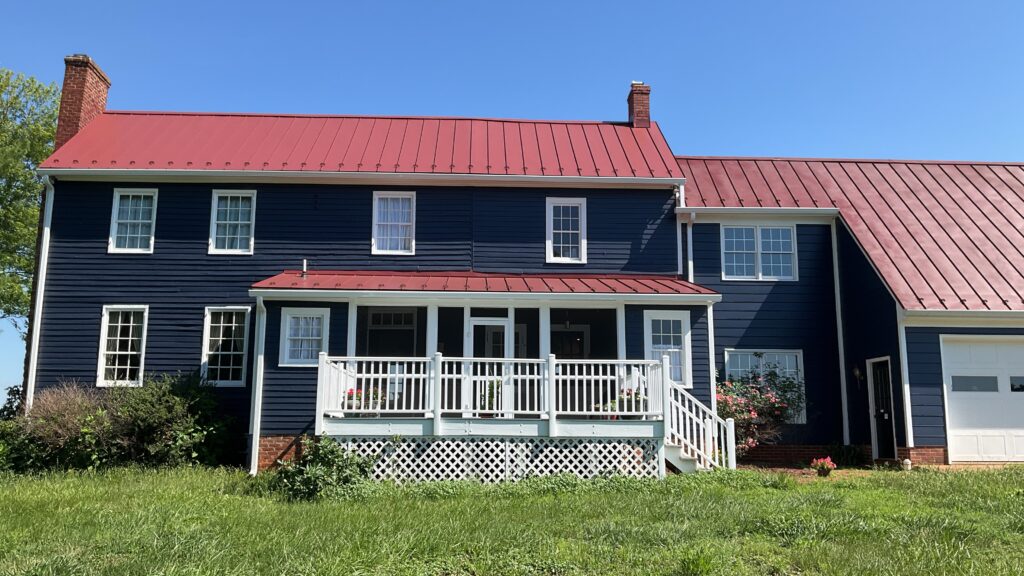
Historic Home Inspection in Fauquier, Loudoun, Rappahannock & Beyond
My background is in masonry restoration with an emphasis on historic preservation and repair. A love of history and older architectural styles is what drew me into the building trades. Now, as a home inspector, I want to share my knowledge with clients looking to buy an older home.
Older and historic homes weren’t necessarily built to modern standards, and they need to be inspected differently than a modern house. Inspecting a historic home requires a specialized, in-depth approach focusing on structural integrity, safety, and knowledge of older materials and practices rather than modern code compliance.
If you’re looking to purchase an older home, especially one with a masonry foundation and chimneys, please give me a call at (540) 270-2501.
Why Older Homes Need a Different Kind of Inspection
A generic inspection checklist misses the things that actually matter on an older home. Working with someone who knows historic construction gets you:
- An inspector who can tell the difference between normal settling in a 100-year-old structure and a real structural problem
- A real read on original systems — wiring, plumbing, chimneys — most inspectors aren’t trained to evaluate
- Straight talk on what’s a character quirk of an old house versus what will actually cost you money
- Guidance on what to budget for and prioritize, since older homes rarely get fixed all at once
What We Look For in an Older Home
Every older home is different, but these are the areas that need the closest attention:
Foundation & Structural Movement — Many older homes in this area sit on stone, rubble, or early brick foundations rather than poured concrete. I check for active movement versus decades-old settling, mortar condition, and how the structure has held up over time.
Masonry & Chimneys — This is where my restoration background comes in directly. I inspect chimney structure, flue condition, and masonry work for the kind of deterioration that’s common — and often hidden — in older brick and stone.
Electrical Systems — Older homes often have a mix of original wiring (knob-and-tube, early aluminum) and later upgrades. I document what’s there, what’s been updated, and what’s a safety concern versus what’s simply outdated.
Plumbing — Galvanized pipe, older cast iron, and early plumbing layouts all show up differently than in a modern home. I note what’s original, what’s been replaced, and where problems are likely to surface.
Windows, Framing & the Building Envelope — Original wood windows, balloon framing, hand-hewn beams — these all need to be evaluated on their own terms, not against a modern building code.
Materials That Need Special Handling — Homes built before the 1980s can contain lead paint or asbestos in certain materials. I flag anything that looks like a candidate so you can get it properly tested before you make decisions about renovation.
What You Get In Your Report
Every inspection includes a full narrative report — not just a checklist. You’ll get a detailed, photo-documented walkthrough of everything found, organized by area of the home, with findings color-coded by priority so you know at a glance what needs attention now versus what to keep an eye on. Explanations are written in plain English, with extra context on anything specific to an older home. Reports are delivered within 24 hours, often the same day as your inspection.
Serving Northern Virginia’s Historic Homes
Based in Warrenton, VA, Dogwood Home Inspection works with buyers of older and historic homes throughout Fauquier, Loudoun, Rappahannock, Fairfax, Prince William, Culpeper, Orange, and Madison Counties. This region has no shortage of beautiful old homes, and I know the building styles and common issues specific to this area.